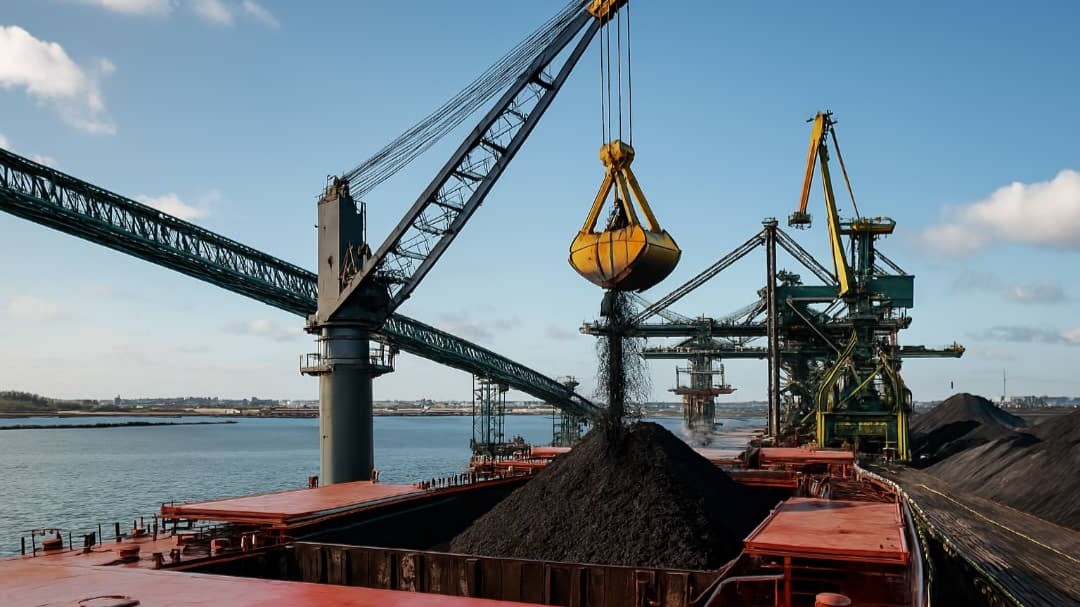
Following the publication by Britannia P&I Club and the International Group of P&I Clubs on October 8, 2025, I must draw your attention to a critical alert concerning coal shipments from the North-East Coast of the United States.
several incidents have involved explosions powerful enough to displace or completely blow off hatch covers. These events endanger crew lives and present major environmental risks.
What we know:
- The US Coast Guard issued a Marine Safety Alert in February 2025
- Incidents remain under active investigation
- The situation is deemed complex by authorities
- All P&I Clubs in the International Group have issued similar circulars
UNDERSTANDING THE PHENOMENON: Why Does Coal Explode?
Coal in bulk is not an inert cargo. It is a chemically active material presenting several simultaneous hazards:
1. Spontaneous oxidation (self-heating)
- Coal, when exposed to oxygen, oxidizes naturally
- This chemical reaction is exothermic: it releases heat
- If heat is not dissipated, temperature rises progressively
- Beyond 70-100°C, the process accelerates exponentially
- Without intervention, spontaneous combustion can occur
2. Production of flammable gases
- Oxidation produces carbon monoxide (CO) - toxic and invisible
- Coal naturally releases methane (CH₄) - highly explosive
- These gases accumulate in confined cargo hold spaces
- In the presence of oxygen and an ignition source: explosion
3. Oxygen depletion
- Oxidation consumes available oxygen in the hold
- Risk of asphyxiation for anyone entering without respirator
- Paradoxically, poorly managed ventilation can worsen explosion risk by bringing fresh oxygen
4. Specific aggravating factors
- Coal type: Sub-bituminous coals and lignites are more reactive
- Particle size: Fine particles (dust) increase oxidation surface area
- Moisture: Water accelerates certain chemical reactions
- Ambient temperature: Hot climates worsen self-heating
- Voyage duration: The longer the transit, the higher the risk
Why these incidents on the US North-East Coast?
Without prejudging the conclusions of ongoing investigations, several hypotheses can be advanced:
- Specific characteristics of coal from this region
- Storage conditions before loading
- Inadequate ventilation procedures
- Transit duration to certain destinations
- Combination of multiple factors
CRITICAL THINKING: What Does This Situation Teach Us?
This 2025 alert raises important questions for our industry:
On knowledge:
- Coal bulk cargo risks have been documented for decades in the IMSBC Code. Why are we still witnessing incidents of this severity?
- Is there a gap between theoretical knowledge and its practical application onboard?
On procedures:
- Are current temperature monitoring and ventilation protocols sufficient for all coal types?
- Should procedures be adapted based on cargo geographical origin?
On training:
- Are crews sufficiently trained to recognize warning signs of dangerous self-heating?
- Is the phenomenon's complexity well understood at all levels of the logistics chain?
On commercial vs safety:
- How can we ensure that safety considerations always prevail over commercial pressures and deadlines?
On regulation:
- Are current international regulations adapted to operational realities?
- Should we consider specific certifications for certain coal origins?
I don't claim to have all the answers. These questions are open and deserve collective reflection from our industry.
CONCLUSION
The safety of our crews and environmental protection must guide our decisions. This International Group alert is not an additional administrative constraint: it's a call for vigilance based on real and serious incidents.
Full circular: https://ow.ly/GKML50X8zEw